Buy waldshut.eu ?
We are moving the project
waldshut.eu .
Are you interested in purchasing the domain
waldshut.eu ?
domain@kv-gmbh.de · 0541-91531010
Buy waldshut.eu ?
Should Germany designate more nature reserves?
Yes, Germany should consider designating more nature reserves to protect its biodiversity and natural habitats. With increasing urbanization and industrialization, many natural areas are at risk of being lost or degraded. By designating more nature reserves, Germany can ensure the preservation of its unique ecosystems and provide a safe haven for endangered species. Additionally, nature reserves can also offer opportunities for research, education, and eco-tourism, contributing to both conservation and economic development. **
What are reserves and hidden reserves?
Reserves are funds set aside by a company to cover potential future expenses or losses. These reserves are recorded on the company's balance sheet and are used to strengthen its financial position. Hidden reserves, on the other hand, refer to undisclosed or unrecorded reserves that are not reflected in the company's financial statements. Companies may create hidden reserves by undervaluing assets or overstating liabilities, which can be used to boost profits in future periods or to absorb unexpected losses. **

Similar search terms for Reserves
Top-Angebote
Products related to Reserves:
-
"""Kumeu River""" """Kumeu River Village Pinot Noir 2022 Red Wine - New Zealand""""""The wine displays a bright cherry red/burgundy color with lifted red fruit aromas. On the palate the wine is cool, round and fruity and with a nice hint of chalky tannin that keeps the wine dry and refreshing. Bright raspberry and maraschino cherry..."24,97 $*Shipping: 0,00 $Secure redirect to the provider
-
RLF Home Tradition Provance Valance"Fits Windows up to 50""W. Use multiples for Wider Windows. Decorator's quality fabrics. Fully lined with Poly/Cotton Ivory lining. Use a 2-1/2"" Continental Rod, a regular 3/4"" Curtain rod, Tension rod or Decorative pole no more than 1-3/8"" Diameter."64,49 $*Shipping: 0,00 $Secure redirect to the provider
-
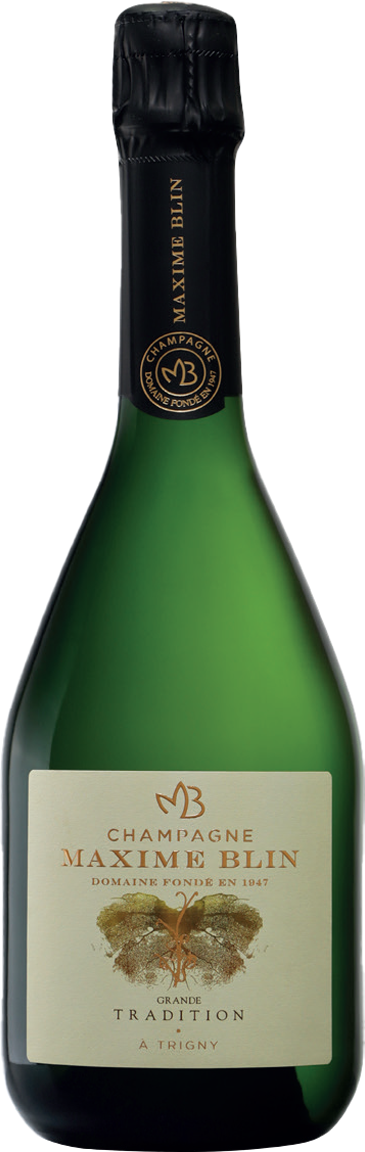
Champagne Brut 'Grande Tradition' Maxime BlinThe 'Grande Tradition' Brut Champagne from the French company Maxime Blin is a Champagne with a classic and refined style, reflecting the identity of the winery. This label is part of the 'Les Fondamentales' collection, a selection that brings together historical cuvées that fully embody the style of the Blin family, each focusing on a specific grape variety. In this particular case, the 'Grande Tradition' highlights the qualities of the Chardonnay cultivated in the Trigny area.The 'Grande Tradition' Maxime Blin Champagne comes from a blend of Chardonnay (90%) and Pinot Noir (10%) grapes grown under certified organic cultivation in the village of Trigny, within the Montagne de Reims area. Here, the vines enjoy excellent southern and south-eastern exposure and the sandy, clay-limestone soil matrix. Following the harvest, the grapes are subjected to a gentle pressing using a Coquard press, with the must thus obtained being transferred to stainless steel tanks for temperature-controlled alcoholic fermentation and subsequent complete malolactic fermentation. The vintage wine is then combined with 30% vins de réserve before bottle fermentation according to the Champenoise Method, combined with 36 months of maturation sur lattes. This is followed by dégorgement and final dosage as Extra Brut, with 4 g/l residual sugar.The 'Grande Tradition' Champagne Maxime Blin has a luminous straw yellow colour with a fine and persistent perlage. The aromatic bouquet expresses fragrant scents of citrus fruits and white flowers, surrounded by memories of bakery and mineral nuances. The taste is fresh, elegant and balanced, with a pleasant savoury trail that rests on a long citrus and mineral finish.57,00 £*Shipping: 48,00 £Secure redirect to the provider

-
What are the advantages and disadvantages of nature reserves?
Nature reserves have several advantages, including the protection of biodiversity, preservation of natural habitats, and opportunities for scientific research and education. They also provide recreational opportunities for visitors and can contribute to the local economy through ecotourism. However, some disadvantages of nature reserves include potential conflicts with local communities, restrictions on land use and development, and the need for ongoing management and funding to maintain the reserve. Additionally, some argue that nature reserves can create a false sense of security and may not adequately address larger environmental issues such as climate change and habitat fragmentation. **
-
Why do people complain about the disappearance of nature reserves?
People complain about the disappearance of nature reserves because they provide important habitats for wildlife, help to protect biodiversity, and offer opportunities for people to connect with nature. As human development and urbanization continue to encroach on natural areas, there is a growing concern about the loss of these valuable spaces. Additionally, nature reserves often provide essential ecosystem services such as clean air and water, which are important for human well-being. Therefore, the disappearance of nature reserves is seen as a threat to both the environment and to people's quality of life. **
-
Which reserves are there?
There are various types of reserves, including natural reserves, wildlife reserves, and financial reserves. Natural reserves are areas of land set aside for the conservation and protection of natural resources and ecosystems. Wildlife reserves are designated areas where wildlife is protected and conserved, often for the purpose of ecotourism and scientific research. Financial reserves refer to funds set aside by organizations or governments for future use or emergencies. Each type of reserve serves a different purpose in preserving and protecting valuable resources. **
-
Are public nature conservation associations actually the true owners of all nature reserves in general?
No, public nature conservation associations are not the true owners of all nature reserves in general. Nature reserves can be owned by a variety of entities, including government agencies, private landowners, indigenous communities, and non-profit organizations. Public nature conservation associations often play a key role in managing and protecting nature reserves, but ownership can be held by different stakeholders depending on the specific reserve and its location. Ownership and management of nature reserves can be complex and involve multiple stakeholders working together to ensure the protection and conservation of these important natural areas. **


How many reserves are needed?
The number of reserves needed can vary depending on the specific context and requirements. Generally, it is recommended to have enough reserves to cover unexpected expenses or fluctuations in demand. This could include having enough cash reserves to cover several months of operating expenses, or having extra inventory on hand to meet sudden increases in demand. The specific number of reserves needed will depend on the size and nature of the business, as well as the level of risk and uncertainty in the industry. **
Is it allowed to walk a dog without a leash in nature reserves?
It depends on the specific rules and regulations of the nature reserve. Some nature reserves may allow dogs to be off-leash, while others may require dogs to be kept on a leash at all times. It is important to check the rules of the specific nature reserve before walking a dog off-leash to ensure compliance with the regulations and to protect the natural environment and wildlife. **
Top-Angebote
Products related to Reserves:
-
"""Laurent-Perrier Les Reserves No. 17 (1.5 Liter Magnum) Champagne - France""""""The color is dense, with a golden glow enlivened with delicate, very fine bubbles. A nose full of freshness with candied citrus, notes of chestnut honey, hazelnut and roasted almond followed by tobacco, truffle and toasted bread aromas. A rich,..."1506,99 $*Shipping: 0,00 $Secure redirect to the provider
-
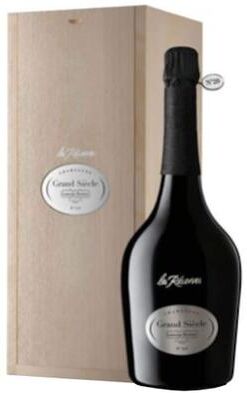
"""Laurent-Perrier Les Reserves No. 20 (1.5 Liter Magnum) with Gift Box Champagne - France""""""Grand Siècle was born from the vision of Bernard de Nonancourt: to recreate the perfect year, one that nature alone could never deliver. Les Réserves N°20 embodies this idea, crafted from a masterful blend of three outstanding years 1999, 1997, and..."2008,99 $*Shipping: 0,00 $Secure redirect to the provider
-
"""Kumeu River""" """Kumeu River Village Pinot Noir 2022 Red Wine - New Zealand""""""The wine displays a bright cherry red/burgundy color with lifted red fruit aromas. On the palate the wine is cool, round and fruity and with a nice hint of chalky tannin that keeps the wine dry and refreshing. Bright raspberry and maraschino cherry..."24,97 $*Shipping: 0,00 $Secure redirect to the provider
-
Should Germany designate more nature reserves?
Yes, Germany should consider designating more nature reserves to protect its biodiversity and natural habitats. With increasing urbanization and industrialization, many natural areas are at risk of being lost or degraded. By designating more nature reserves, Germany can ensure the preservation of its unique ecosystems and provide a safe haven for endangered species. Additionally, nature reserves can also offer opportunities for research, education, and eco-tourism, contributing to both conservation and economic development. **
-
What are reserves and hidden reserves?
Reserves are funds set aside by a company to cover potential future expenses or losses. These reserves are recorded on the company's balance sheet and are used to strengthen its financial position. Hidden reserves, on the other hand, refer to undisclosed or unrecorded reserves that are not reflected in the company's financial statements. Companies may create hidden reserves by undervaluing assets or overstating liabilities, which can be used to boost profits in future periods or to absorb unexpected losses. **
-
What are the advantages and disadvantages of nature reserves?
Nature reserves have several advantages, including the protection of biodiversity, preservation of natural habitats, and opportunities for scientific research and education. They also provide recreational opportunities for visitors and can contribute to the local economy through ecotourism. However, some disadvantages of nature reserves include potential conflicts with local communities, restrictions on land use and development, and the need for ongoing management and funding to maintain the reserve. Additionally, some argue that nature reserves can create a false sense of security and may not adequately address larger environmental issues such as climate change and habitat fragmentation. **
-
Why do people complain about the disappearance of nature reserves?
People complain about the disappearance of nature reserves because they provide important habitats for wildlife, help to protect biodiversity, and offer opportunities for people to connect with nature. As human development and urbanization continue to encroach on natural areas, there is a growing concern about the loss of these valuable spaces. Additionally, nature reserves often provide essential ecosystem services such as clean air and water, which are important for human well-being. Therefore, the disappearance of nature reserves is seen as a threat to both the environment and to people's quality of life. **
Similar search terms for Reserves
-
RLF Home Tradition Provance Valance"Fits Windows up to 50""W. Use multiples for Wider Windows. Decorator's quality fabrics. Fully lined with Poly/Cotton Ivory lining. Use a 2-1/2"" Continental Rod, a regular 3/4"" Curtain rod, Tension rod or Decorative pole no more than 1-3/8"" Diameter."64,49 $*Shipping: 0,00 $Secure redirect to the provider
-
Champagne Brut 'Grande Tradition' Maxime BlinThe 'Grande Tradition' Brut Champagne from the French company Maxime Blin is a Champagne with a classic and refined style, reflecting the identity of the winery. This label is part of the 'Les Fondamentales' collection, a selection that brings together historical cuvées that fully embody the style of the Blin family, each focusing on a specific grape variety. In this particular case, the 'Grande Tradition' highlights the qualities of the Chardonnay cultivated in the Trigny area.The 'Grande Tradition' Maxime Blin Champagne comes from a blend of Chardonnay (90%) and Pinot Noir (10%) grapes grown under certified organic cultivation in the village of Trigny, within the Montagne de Reims area. Here, the vines enjoy excellent southern and south-eastern exposure and the sandy, clay-limestone soil matrix. Following the harvest, the grapes are subjected to a gentle pressing using a Coquard press, with the must thus obtained being transferred to stainless steel tanks for temperature-controlled alcoholic fermentation and subsequent complete malolactic fermentation. The vintage wine is then combined with 30% vins de réserve before bottle fermentation according to the Champenoise Method, combined with 36 months of maturation sur lattes. This is followed by dégorgement and final dosage as Extra Brut, with 4 g/l residual sugar.The 'Grande Tradition' Champagne Maxime Blin has a luminous straw yellow colour with a fine and persistent perlage. The aromatic bouquet expresses fragrant scents of citrus fruits and white flowers, surrounded by memories of bakery and mineral nuances. The taste is fresh, elegant and balanced, with a pleasant savoury trail that rests on a long citrus and mineral finish.57,00 £*Shipping: 48,00 £Secure redirect to the provider
-
Champagne Brut Grand Cru 'Tradition' GatinoisChampagne Gatinois Brut Grand Cru 'Tradition' reflects the structure and expressive depth of Champagne from Aÿ, a Grand Cru village located in the Vallée de la Marne, a few kilometres from Epernay. The village, where Pinot Noir reigns supreme with almost 90% of the entire vineyard area, is the largest of the Champagne villages with more than 4,000 inhabitants. Already famous in ancient times for the quality of its still wines, Aÿ is today established among the largest territories in all of Champagne for the cultivation of Pinot Noir.The Brut Grand Cru Champagne Gatinois 'Tradition' consists of a blend of Pinot Noir (80%) and Chardonnay (20%) grapes, varieties cultivated within the Grand Cru village of Aÿ on soils with a strong chalk component. In the cellar, the grapes undergo a soft pressing, followed by the alcoholic fermentation of the must and then the maturation of the vintage wine for a few months, which is then blended with 30% vin de reserve in the preparation of the sparkling wine base. This is followed by bottle fermentation according to the Champenoise Method, combined with at least 24-30 months of maturation on the lees in glass. This is followed by degorgement and final dosage as Brut, at 7 g/l residual sugar.The Champagne 'Tradition' Brut Grand Cru from the Gatinois sparkling wine company has a light, brilliant straw yellow colour with a refined perlage. Fresh aromas of pear, lime and white flowers emerge from the glass, supported by anelegant mineral timbre and deep hints of brioche and toasted hints. All complemented by the vinous note typical of Pinot Noir. Taste development endowed with excellent freshness and sapidity, with a good persistence in which the sensations previously perceived on the nose reappear.42,00 £*Shipping: 48,00 £Secure redirect to the provider
-
Which reserves are there?
There are various types of reserves, including natural reserves, wildlife reserves, and financial reserves. Natural reserves are areas of land set aside for the conservation and protection of natural resources and ecosystems. Wildlife reserves are designated areas where wildlife is protected and conserved, often for the purpose of ecotourism and scientific research. Financial reserves refer to funds set aside by organizations or governments for future use or emergencies. Each type of reserve serves a different purpose in preserving and protecting valuable resources. **
-
Are public nature conservation associations actually the true owners of all nature reserves in general?
No, public nature conservation associations are not the true owners of all nature reserves in general. Nature reserves can be owned by a variety of entities, including government agencies, private landowners, indigenous communities, and non-profit organizations. Public nature conservation associations often play a key role in managing and protecting nature reserves, but ownership can be held by different stakeholders depending on the specific reserve and its location. Ownership and management of nature reserves can be complex and involve multiple stakeholders working together to ensure the protection and conservation of these important natural areas. **
-
How many reserves are needed?
The number of reserves needed can vary depending on the specific context and requirements. Generally, it is recommended to have enough reserves to cover unexpected expenses or fluctuations in demand. This could include having enough cash reserves to cover several months of operating expenses, or having extra inventory on hand to meet sudden increases in demand. The specific number of reserves needed will depend on the size and nature of the business, as well as the level of risk and uncertainty in the industry. **
-
Is it allowed to walk a dog without a leash in nature reserves?
It depends on the specific rules and regulations of the nature reserve. Some nature reserves may allow dogs to be off-leash, while others may require dogs to be kept on a leash at all times. It is important to check the rules of the specific nature reserve before walking a dog off-leash to ensure compliance with the regulations and to protect the natural environment and wildlife. **
* All prices are inclusive of VAT and, if applicable, plus shipping costs. The offer information is based on the details provided by the respective shop and is updated through automated processes. Real-time updates do not occur, so deviations can occur in individual cases. ** Note: Parts of this content were created by AI.